In my children’s primary school the virtue of resilience is explicitly encouraged.1 Picking yourself up, dusting yourself down and having another go is indeed important in life. However one area where they are missing a trick in moulding the youth of London is with their resilience role models, who tend to be over-achieving astronauts, scientists and other such alienating figures.
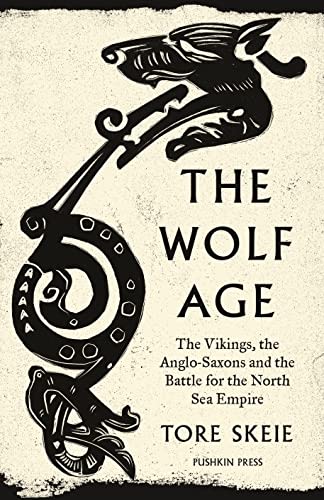
I would suggest instead that kids are taught to follow the example of Æthelred the Unready, who emerges from the pages of The Wolf Age: The Vikings, the Anglo-Saxons and the Battle for the North Sea Empire by Tore Skeie as an unexpectedly inspiring historical figure.
Æthelred was thrust unexpectedly onto the throne of Anglo-Saxon England in 978 when his elder brother King Edward the Martyr (described as a “quick-tempered, moody and unstable” 15 year old) was “spontaneously” stabbed to death by a group of thanes. Æthelred ruled for the subsequent 35 years, and, despite being spectacularly unsuccessful in all that time, losing battle after battle, plans going awry on land and on sea, he never gave up, kept coming back time and time again, before dying peacefully in his bed of an unidentified wasting illness aged 48.
If you can meet with disaster after disaster...
Let’s dig into a timeline of that uplifting record:
-
In the decade of the 990s he endured losing not one but two large armies, the first slaughtered, the second ran away. Constant Viking raiding went on more or less unchecked. He made two massive payoffs in silver (3.5 tonnes then 5 tonnes) to get the Vikings to go away. But crucially, he didn’t give up.
-
Undaunted, over the next decade of the 1000s Æthelred worked hard to build up England’s fortifications, again in the context of continual attacks, but to no effect. He lost two large armies once more (with his family members among the dead). Even worse he lost a brand new fleet of 200 ships built at enormous effort. This was before the fleet had even made contact with the enemy: two of his chiefs attacked each other while they were waiting for the Vikings to show up. Another monster bribe of 12 tonnes of silver was paid.
-
In the 1010s, despite his disastrous record Æthelred didn’t give up. He paid more bribes, including successfully enticing the Viking Number Two (Thorkell the Tall) over to his side. Unfortunately this didn’t help Æthelred resist the largest Viking invasion yet, now aiming to conquer England completely. Æthelred made a strategic retreat to his in-laws in Normandy. In a rare piece of good luck, the Viking leader Sweyn Forkbeard died just as he was about to go and collect the English crown, and Æthelred launched a lightning invasion from France, successfully reclaiming the throne.
In the end Æthelred fell sick and left his son Edmund Ironside to fight his battles for him (with much greater success). Despite Æthelred’s many defeats his enemies could never finish him off, but his illness could and Æthelred finally died on 23rd April 1016.
Æthelred the Resilient
Resilience is all very well when you are talented. But it is even more impressive when you are consistently unequal to the occasion.
Despite 35 years of constant failure in his job as king to keep his people safe, Æthelred’s resilience and self-belief never wavered.
Which is why I am starting a petition2 to posthumously rename “Æthelred the Unready” to “Æthelred the Resilient”, which is step one in my plan to make the study of his life mandatory for all primary school children in the UK.
The saintly plunderer
The other main character in this story also has an undeserved reputation: Saint Olaf, credited with bringing Christianity to Norway. Whereas Æthelred has been undervalued by posterity, Olaf has experienced the reverse with highly undeserved praise. While he did indeed play a role in bringing The Church to Norway - albeit motivated by greed and self interest - he also brought murder, rape and destruction to Norway and everywhere else with a coast line, including England, France, Portugal, and (then Muslim) Southern Spain.
What’s in the book?
The narrative of the book covers the reign of Æthelred from 978 to a little while after his death in 1016, however the story is told on a much broader canvas covering the “North Sea world”: Scandinavia and England, with a bit of Normandy and Iceland thrown in too, and guest appearances from Spain and Portugal.
One cannot really understand the history of England in this period without understanding Scandinavian history, and one cannot really understand Scandinavian history without understanding English history.
Tore Skeie, The Wolf Age
For example “Saint Olaf” would not have been able to fund his takeover of the territory of what is now Norway without the silver he had pilfered and extorted from England. And his ‘modern’ vision for a strong kingship - with a more obedient set of subjects - came from role models in Christian Europe, where a monotheistic religion matched nicely with a mono-rex style government. There’s only room for one big guy and you better do what he says!
England was more obviously impacted by the Vikings as it was pummelled and plundered remorselessly for 35 years straight before being taken over by the Viking king Cnut.
Skeie is also keen to point out the similarities between English and Scandinavian societies of the time - and indeed broader European societies - where power went hand-in-hand with a ruthless dominating brutality and warring with neighbours was just what kings did. What made the Vikings special was not necessarily their bad behaviour but the fact that they were so good at it.
Style guide
The Wolf Age is a breezy read: a gripping narrative makes the years fly by.
Skeie also nicely mixes in a bit of context every now and again which varies the pace nicely as well as providing some behind-the-scenes insight. For example there is a section on ‘Viking religion’, a bit on Viking kingship, what it is like to be a foot soldier in a 10th century marauding army3, a section on Viking soldiers and their equipment4, and so on.
While the focus is on readability and engagement the author does also - I think! - try to follow the sources. They point out where evidence for what happened is lacking and where people disappear and reappear in the historical record.
Any problems?
The only thing I found a bit frustrating was that the sources that Skeie usese are often obscured. For example every now and again Skeie will set out a direct quote, such as:
King, I have heard that your men cast bodies in great heaps,
far from the ships they turned Ringmere Heath red with bloodA Viking skald (presumably Sigvat?) recounting ‘Saint’ Olaf’s victory at the Battle of Ringmere in a Norwegian mede hall
...but it is left to the reader to figure out the details of where the text comes from. So I think the above quote comes from a person called Sigvat but this relies on my own detective work and the accuracy of Wikipedia.
I guess this is in keeping with the popular history book vibe, but it left me feeling adrift at times: if I hear a voice echoing down to me from the past I would like to know who is speaking.
What I most appreciated
What I enjoyed most about the book was the way it carries you along with the story in all its bloody excitement, but without at all revelling in the violence:
In the year 1007, he [Olaf Harraldsson] is said to have left his home town and, like many others of his standing, embarked on an honourable career of violence, robbery and destruction.
Tore Skeie, The Wolf Age, describing ‘Saint’ Olaf’s first forays into the wider world
...and also without cheering for one side or the other, just giving you a strong sense of the mad compelling logic of the decades-long slaughter.
In short Skeie masterfully steers us between the whirlpool of blinkered anachronism and the rocks of abject relativitivity.
Conclusion
A compelling and engaging romp through the intertwined English and Scandinavian histories at the turn of the tenth and eleventh centuries.
Illuminating a time which has always been murky for me, it also brings to the fore one of England’s most underrated kings: Æthelred the Resilient.
I don’t remember this from my own primary school days, where arithmetic tended to get more air time instead. ↩︎
Or at least I will be starting a petition as soon as I can source the 5 email addresses, as required by the UK government petition website that I need to get it off the ground. ↩︎
Apparently it was pretty boring most of the time, traipsing around in small gangs trying to get hold of food for you and the rest of the army. ↩︎
I was surprised to find out that (a) the Viking raiders represented only the ‘upper class’ of their societies (with the peasant farmers staying back home) and that at the same time (b) most of them were armed with spears not swords because swords were ‘expensive high status weapons’. Maybe you need more training to fight with a sword too, because surely most Vikings would have been able to afford splurging on a nice sword with their ill-gotten gains? ↩︎
Book details
(back to top)- Title -
The Wolf Age : The Vikings, the Anglo-Saxons and the Battle for the North Sea Empire
- Author -
Tore Skeie
- Publication date -
October 2021
- Publisher -
Pushkin Press
- Pages -
384
- ISBN 13 -
9781782276470
- Amazon UK -
- Amazon US -